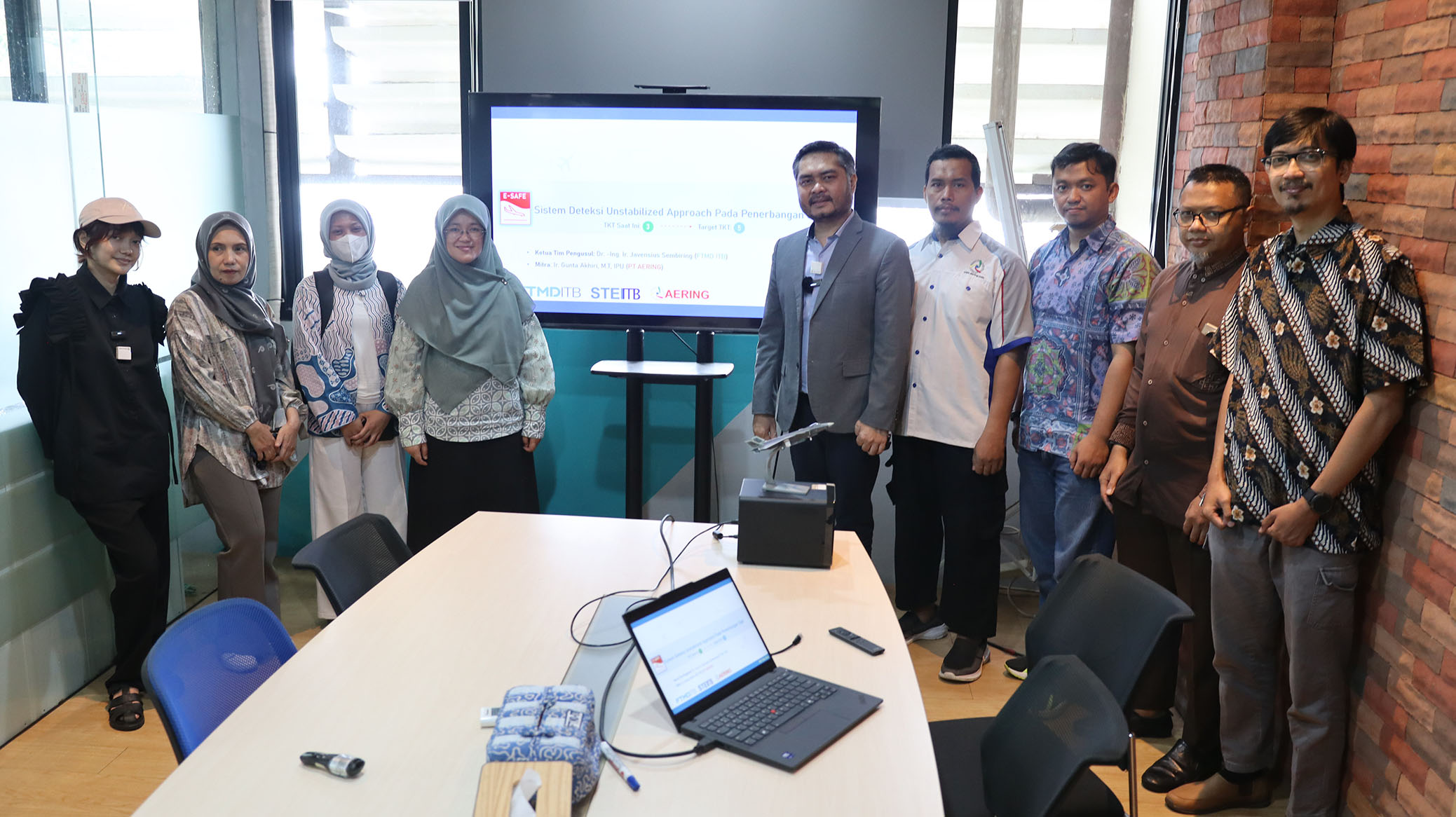
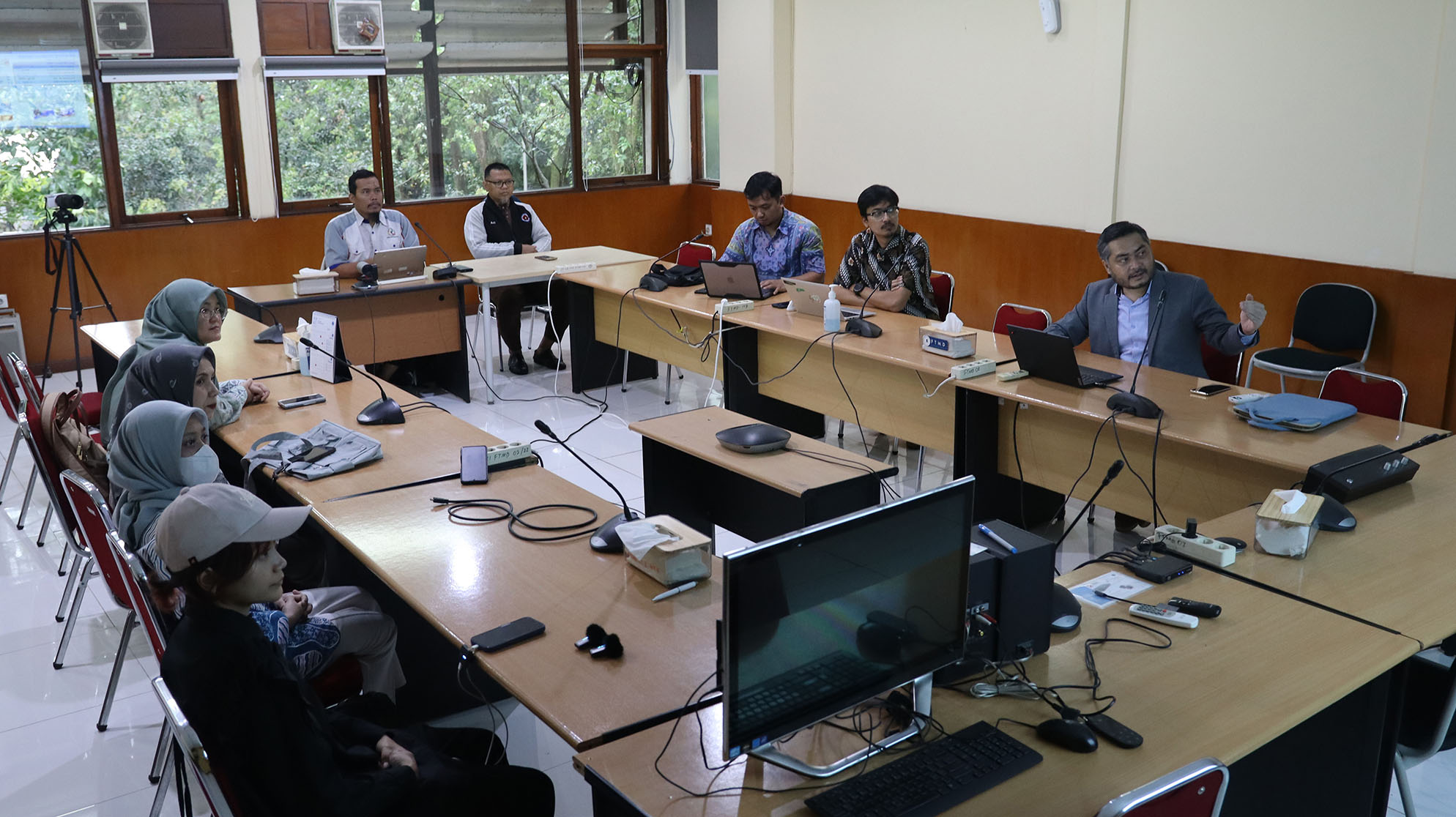
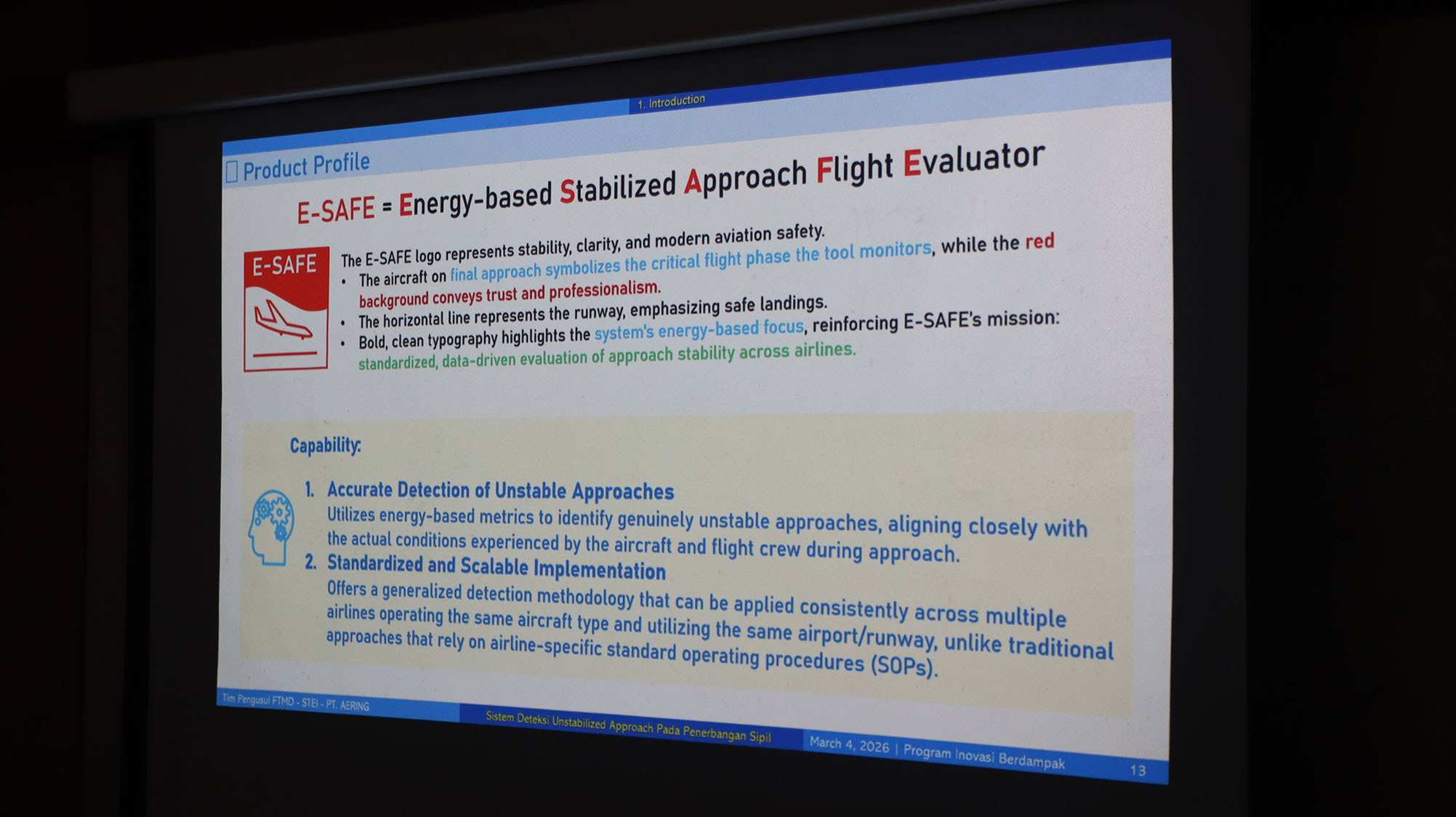
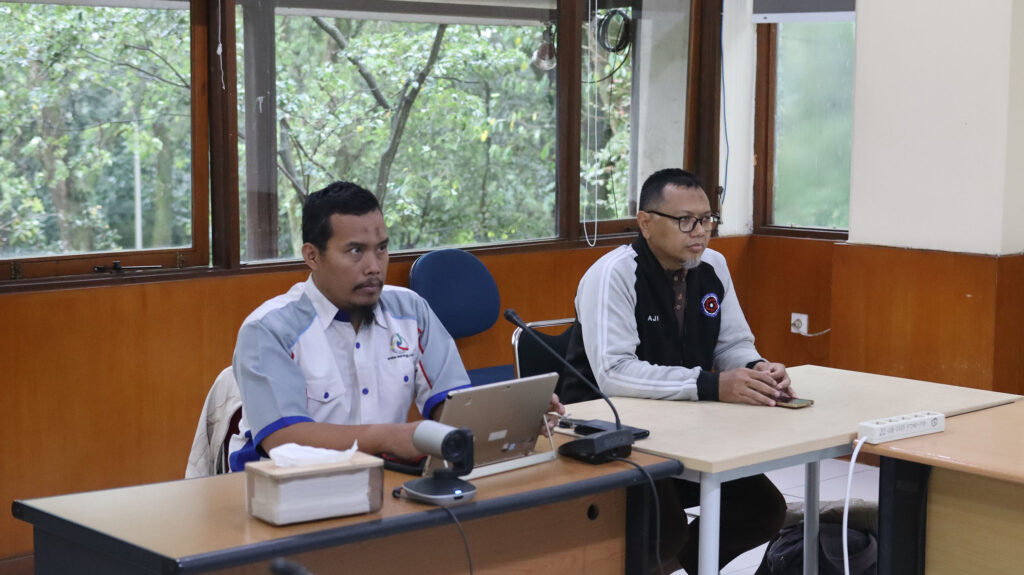
BANDUNG, dri.itb.ac.id – The Directorate of Research and Innovation (DRI) of Institut Teknologi Bandung (ITB) once again conducted a site visit to review the progress of research projects supported through its innovation funding program. On Wednesday (March 4, 2026), the DRI team visited Labtek 2 of the Faculty of Mechanical and Aerospace Engineering (FTMD) to review the development of E-SAFE (Energy-Based Stabilized Approach Flight Evaluator), an innovative software solution designed to enhance civil aviation safety standards.
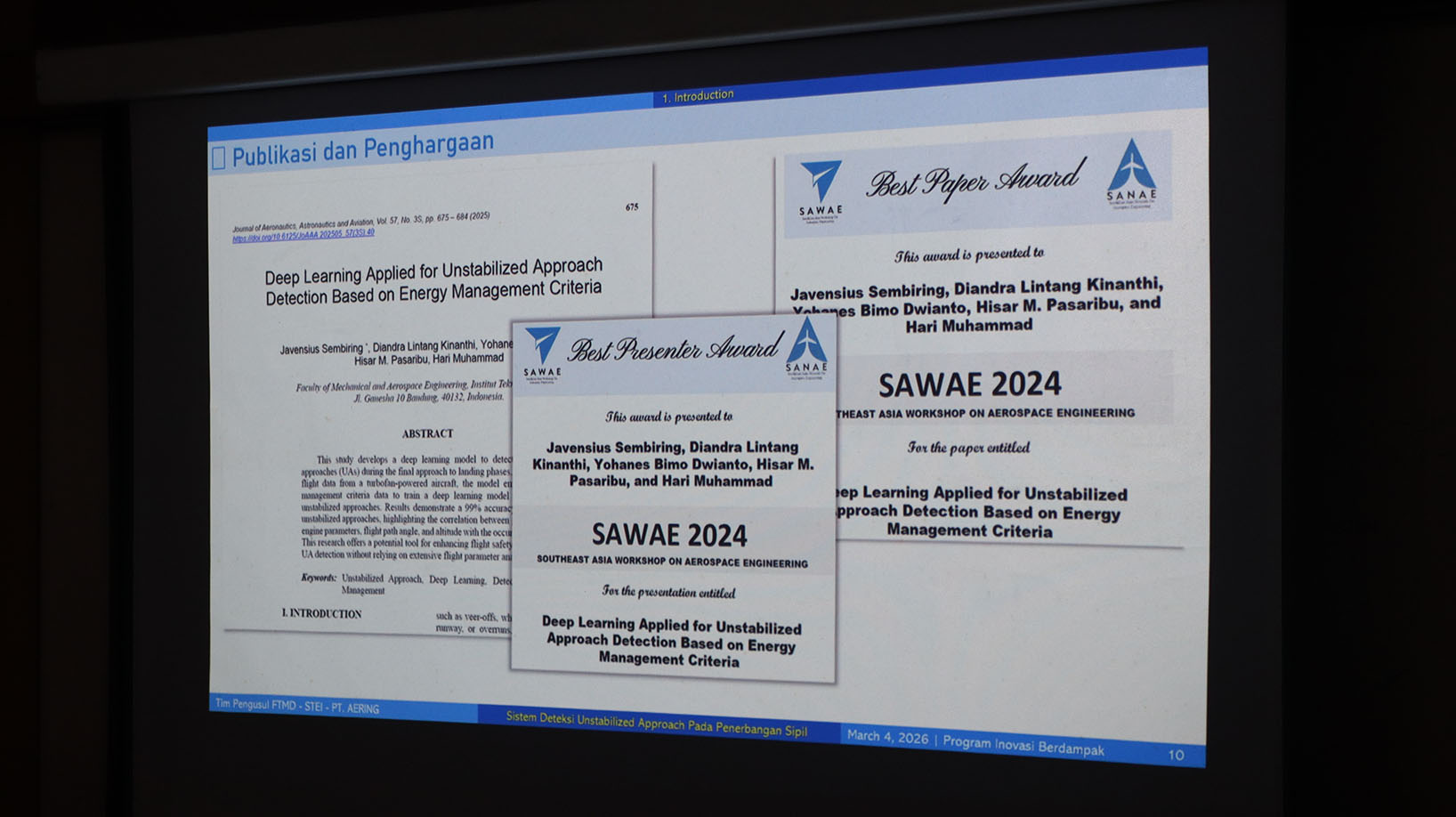
The research is led by Dr.-Ing. Ir. Javensius Sembiring, S.T., M.T. from the Aerospace Engineering Study Program at FTMD ITB, in collaboration with Muhammad Lutfi Hakim, Ph.D. (FTMD) and Hari Purnama, Ph.D. from the School of Electrical Engineering and Informatics (STEI). This multidisciplinary collaboration also involves graduate students and strategic industry partners, including Purnomo from PT AERING, a national flight data analysis provider.
Addressing Gaps in Aviation Safety Standards
Aircraft accidents frequently occur during one of the most critical phases of flight: landing. Data shows that the final approach through landing phase accounts for approximately 48% of total aircraft accidents worldwide.
To date, airlines have generally relied on detection systems based on Standard Operating Procedures (SOPs) to monitor unstabilized approaches. However, SOP-based systems have significant limitations, particularly because they are rigid and vary from one airline to another.
“SOP-based systems often trigger false detections. If even one parameter is violated, the system immediately classifies the approach as unstable, even though the aircraft may still be physically within a safe condition. Conversely, SOPs can differ between airlines, meaning that the standards are not universal,” explained Dr. Javen.
The E-SAFE Solution: An Energy-Based Approach
To address this gap, the FTMD ITB team developed E-SAFE. Unlike conventional systems, E-SAFE applies a universal Energy Management approach that more accurately represents the aircraft's actual physical condition.
How E-SAFE Works
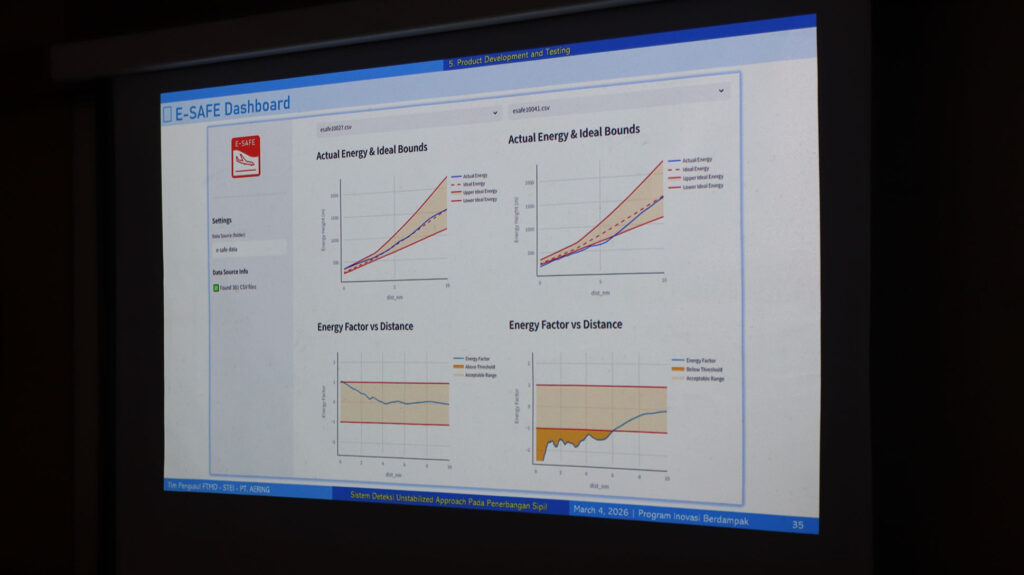
Energy Boundary: The system establishes an “ideal energy boundary” by integrating flight path and ground speed parameters.
Accurate Detection: If the aircraft's energy falls outside the defined threshold—for example, exceeding two area units on the graph—the system identifies the condition as an unstabilized approach.
Root Cause Analysis: E-SAFE can distinguish whether the instability is caused by excess energy or an energy deficit, enabling more objective pilot performance evaluations.
Future Development and Commercialization Prospects
The innovation goes beyond theoretical research. E-SAFE has been implemented as a web-based dashboard equipped with a Batch Processing feature. This feature allows airlines or service providers to process thousands of flight data records simultaneously within seconds and generate comprehensive monthly reports.
E-SAFE provides a potential solution for airlines with limited research and development (R&D) resources. Through an add-on system, E-SAFE can be integrated directly into existing flight data monitoring software used by vendors such as PT AERING.
“Through this collaboration, we obtained an algorithm that is significantly faster and more accurate than the system we previously had. This greatly assists airlines in mitigating risks and delivering targeted safety briefings to pilots,” said a representative of PT AERING.
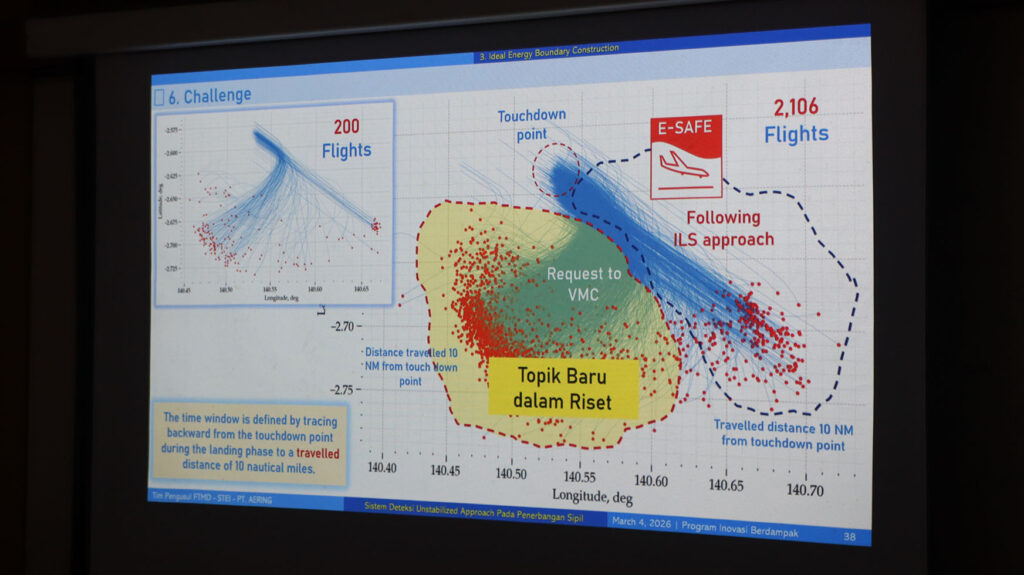
Going forward, the research will be further developed to address the challenge of detecting Unstabilized Approaches under Visual Meteorological Conditions (VMC), in which aircraft do not rely on instrument landing guidance due to prevailing weather conditions. This type of operation is particularly prevalent in the Papua region.
Ultimately, the E-SAFE innovation is expected to be implemented as an add-on feature for corporate software, allowing it to be directly utilized by various airlines without placing additional internal R&D costs on them.